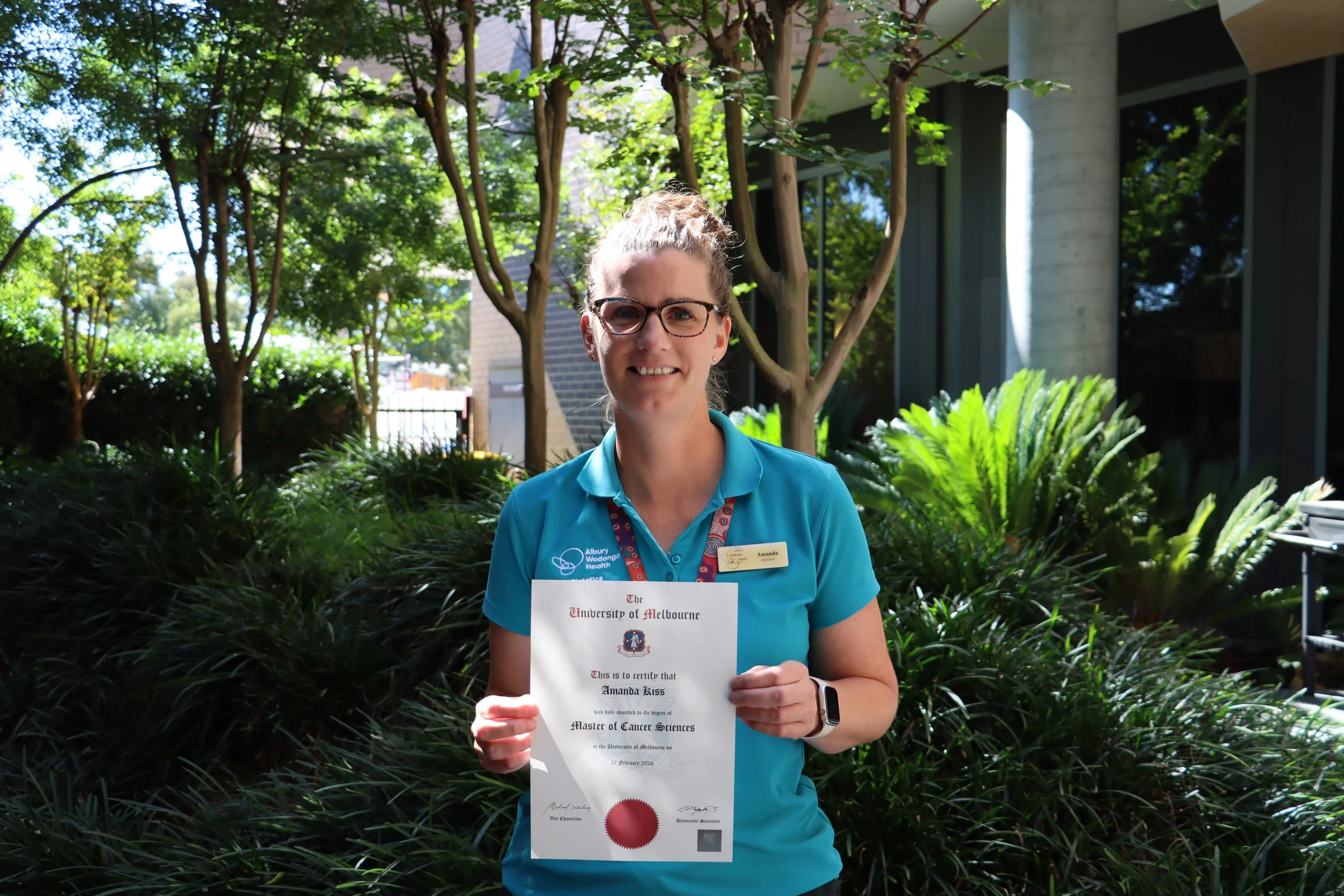
In 2023, Amanda Kiss was awarded the Tim Fischer scholarship to undertake her Masters in Cancer Sciences at the University of Melbourne. Hear directly from Amanda Below and listen to exactly how it is benefiting local cancer care.
How I Was Awarded the Scholarship
In 2023, I was honoured to receive the Tim Fischer Memorial Scholarship through the Albury Wodonga Regional Cancer Centre (AWRCC) Trust Fund Education Program. This scholarship supported a fully funded place in the Master of Cancer Sciences at the University of Melbourne. Having worked at AWRCC as a dietitian since it first opened, I saw this as a valuable opportunity to deepen my understanding of cancer across multiple disciplines and further strengthen the care I provide to patients.
My motivation for undertaking this program was to enhance my clinical skills and continue delivering the highest standard of evidencebased care. I aimed to broaden my knowledge of bestpractice cancer care, contribute more confidently to multidisciplinary discussions, and develop research skills that could directly inform and improve patient outcomes.
What I Learnt
Completing this course has strengthened my ability to support not only patients, but also fellow allied health professionals working in oncology across our region. In regional settings, access to specialist expertise is important, and this program has helped build local capability by strengthening knowledge within our workforce.
The twoyear course covered a wide range of topics, including the biological foundations of cancer, diagnostic techniques, and cancer epidemiology. A key highlight for me was developing a clearer understanding of how cancer develops, progresses and is managed. I found it especially rewarding to contribute to course discussions from a dietitian’s perspective alongside colleagues from medical and nursing backgrounds, reinforcing the importance of multidisciplinary care.
The final component of the course was a research project, which allowed me to apply my learning to an issue of direct relevance to patient care. My study, Barriers to Food Access During Cancer Treatment: A Qualitative Study of Rural and Regional Patients Undergoing Radiotherapy Away from Home, explored the challenges faced by patients who must travel or temporarily relocate for treatment.
Through interviews with patients undergoing radiotherapy, I gained insight into the significant disruption caused by longdistance travel or extended time away from home. Participants described limited access to shops and cooking facilities, travelrelated fatigue, and increased financial pressure from fuel, groceries and accommodation costs. These challenges often led to altered dietary intake, reliance on convenience foods, or missed meals, increasing the risk of malnutrition.
Understanding these barriers is critical, as malnutrition affects up to 30–60 per cent of people with cancer and is linked to poorer outcomes and reduced quality of life. Food access remains an underrecognised contributor to this issue.
Impact on Cancer Care in Our Region
The knowledge and skills gained through this course will directly benefit cancer care in our region. I am better equipped to share evidencebased knowledge with colleagues and contribute to future quality improvement and research initiatives, particularly in advocating for the prevention of malnutrition in cancer care.
Thank You to the Community
This opportunity would not have been possible without the generosity of the community through donations to the Sunshine Trust. I extend my sincere thanks to the Hon Tim Fischer and his family, whose vision in establishing this scholarship will continue to make a lasting impact on cancer services in our region.